In conversation with award-winning biographer and historian, Charlotte Gray, about her luminous new double biography, Passionate Mothers, Powerful Suns: The Lives of Jennie Jerome Churchill and Sara Delano Roosevelt
During a pandemic lockdown, Charlotte Gray’s long-time editor, Phyllis Bruce, told Gray about a remarkably interesting fact: that Jennie Jerome and Sara Delano were born in 1854 within 100 kilometers of each other in New York State. Gray, one of Canada’s finest historians, was reasonably intrigued. So intrigued, in fact, that she decided to write a dual biography of the mothers of Winston Churchill and Franklin Roosevelt, Passionate Mothers, Powerful Sons: The Lives of Jennie Jerome Churchill and Sara Delano Roosevelt.
“I’ve always enjoyed writing about women, and not just the pioneers, like Susanna Moodie, or path-breakers, like Nellie McClung,” Gray explained. “My very first book was Mrs. King, about the mother of William Lyon Mackenzie King. Phyllis had been thinking about my next project, and said, ‘Why don’t you come full circle?’”
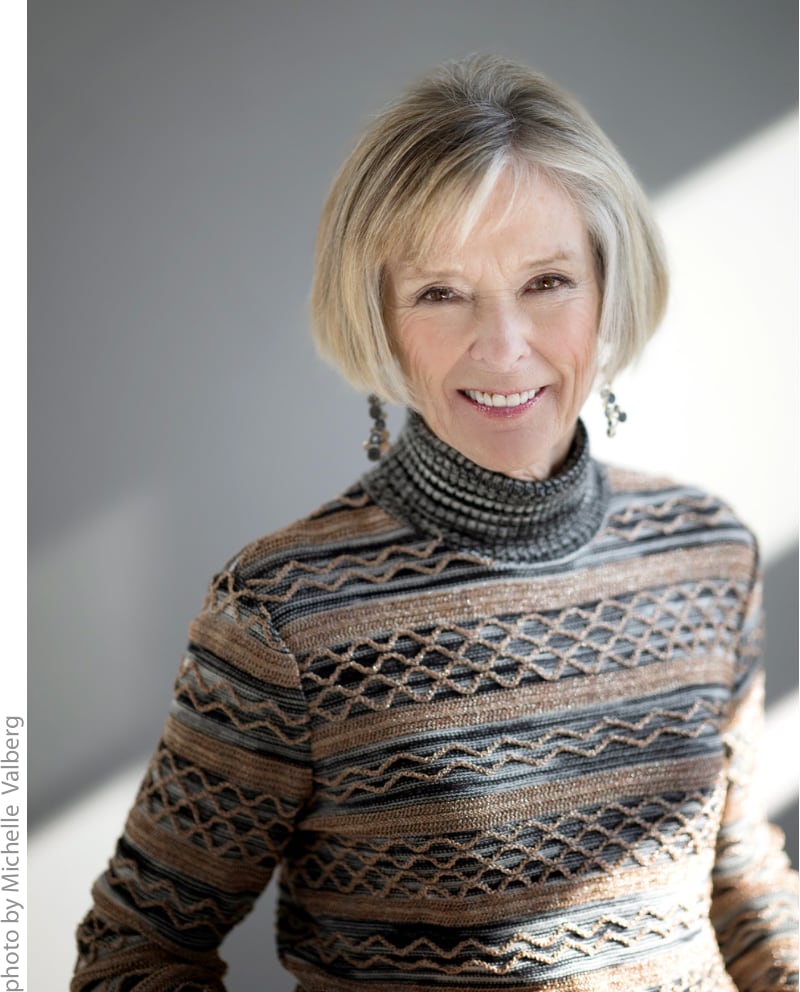
Gray decided to.
“I was intrigued by the coincidence of their births,” she said, “and then — as I read more widely — by the difference in their trajectories. But there were similarities too. Both shocked their parents with their choice of husbands. Both were widowed early. Each was, in her own way, a formidable woman, with many strong views and interests. So I wanted to see how, within the restrictions on women’s roles during their lifetimes, both were able to exert a lot of agency.”
When she began her research, Gray was challenged by the fact that the biographers of Churchill and FDR — who were almost all male — tended to denigrate both men’s mothers, and minimize their roles in their son’s lives.
“They reflected the misogyny of the late nineteenth and twentieth century, and always emphasized Jennie’s party-going and debts, and Sara’s over-protective maternal style. I wanted to right the balance,” Gray said. “My approach was to see what the women, and their contemporaries, had written about them, before both became overshadowed by their sons.”
Initially, Gray had trouble accessing key primary sources.
“Covid lockdowns were not good for biographers; we couldn’t access the raw materials in archives,” she explained. “I was thankful that I had chosen subjects from famous families, so there were quite a lot of secondary sources — published memoirs, volumes of collected correspondence — from which I could draw.”
When lockdowns ended, Gray was hugely relieved and travelled to Churchill College in Cambridge for “the Jennie material,” and the Franklin D. Roosevelt Presidential Library in the Hudson Valley for “the Sara sources.”
“I could touch the paper on which they had written to their sons,” she said. “I could check that I hadn’t missed anything, or if previously-published letters had been edited too rigorously. I could see the wild swirl of Jennie’s handwriting, and the careful precision of Sara’s cursive. I could go through their photo albums, and collections of dinner menus. I would love to have spent far longer in both places.”
Still, she came away with reams of excellent material. In the hands of one of Canada’s finest biographers, the book crackles with these fresh, fascinating, insightful, and generous details.
Gray’s hopes for readers of Passionate Mothers, Powerful Sons are multifold.
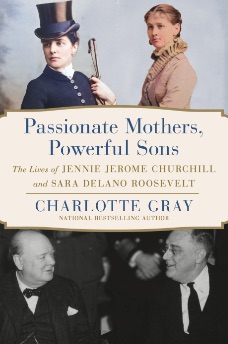
“I want readers of this book to enjoy seeing how two strong-willed women could shape their own lives, even within the restrictive gender assumptions of the nineteenth century,” she said. “I expect that readers will also enjoy the social history and political context in which I embed the biographical details. I hope that a deep dive into these women’s stories will allow readers to learn what has and hasn’t changed in the pattern of women’s lives.”
“Exploring their complicated relationships with their sons proves that there is no cookie-cutter ideal way of raising a child,” Gray added. “However, in both families, the mother-son bond was super-strong, and both men emerged from their childhoods with rock-solid egos — an essential ingredient in political success.”
The book, an instant bestseller in Canada, has been widely praised as “entirely original and brilliant,” “magnetically written,” deeply perceptive and superbly researched. I wholeheartedly agree with those assessments; Passionate Mothers, Powerful Sons is a luminously insightful examination of the lives and influence of two truly remarkable women. It reads like a fine novel (hums along at a good speed; its “characters” are thoroughly compelling) but as a dual biography that deftly weaves together the parallel and complicated lives of Jennie Jerome Churchill and Sara Delano Roosevelt, it is a masterpiece.
Gray’s latest belies the belief, still held in some circles, that historical non-fiction is boring. A skilled and shrewd historian, Gray is mindful of this.
“Historical non-fiction can be criminally boring, when it is just one damn thing after another,” she admitted. “If people want ‘just the facts,’ they can go to Wikipedia (although many facts are challenged these days.) But great historical non-fiction should be a narrative that tells a story with insight and accuracy, while illuminating a larger context for the reader. I’m always asking myself, ‘What does the past look/smell/sound/taste like? What was it like to stand on Fifth Avenue, in Manhattan, on an October Sunday in 1854?’ I want to take readers into the past. I learned my writing skills by writing for magazines, in Canada and Britain. The editors taught me how to structure a story and bring it alive. The death of so many good magazines in Canada has meant that younger writers may not get that chance today.”
Gray confessed that writing Passionate Mothers, Powerful Sons was “very hard work,” especially because she was essentially writing two biographies.
“There were times during writing the first draft when I felt crushed by the challenge I had set myself,” she said. “The Covid lockdowns didn’t help – in normal times I recharge my batteries by seeing friends, playing tennis, visiting libraries and archives, and meeting people. My husband was terrific at keeping my spirits up, and cooking delicious meals for us.”
Still, writing the first draft wore her down.
“However, once I had completed the first draft, and the world began to open up,” she was quick to add. “I started enjoying the reshaping, rephrasing and ruthless cutting that is part of the second draft. And I was starting to get positive feedback from my editors, so my confidence grew. Now, the fantastic reception that has greeted Passionate Mothers, Powerful Sons fills me with joy.”
Passionate Mothers, Powerful Sons: The Lives of Jennie Jerome Churchill and Sara Delano Roosevelt is available to buy at your local independent bookstore, and everywhere fine books are sold.
This interview was originally published in the October 2023 issue of The Humm. For graciously allowing me to share it here, thanks to my publisher Kris Riendeau.
 One Good Thing
Leave a comment